
4 July 2026
The Best Property Management Software for Landlords in Australia (2026)
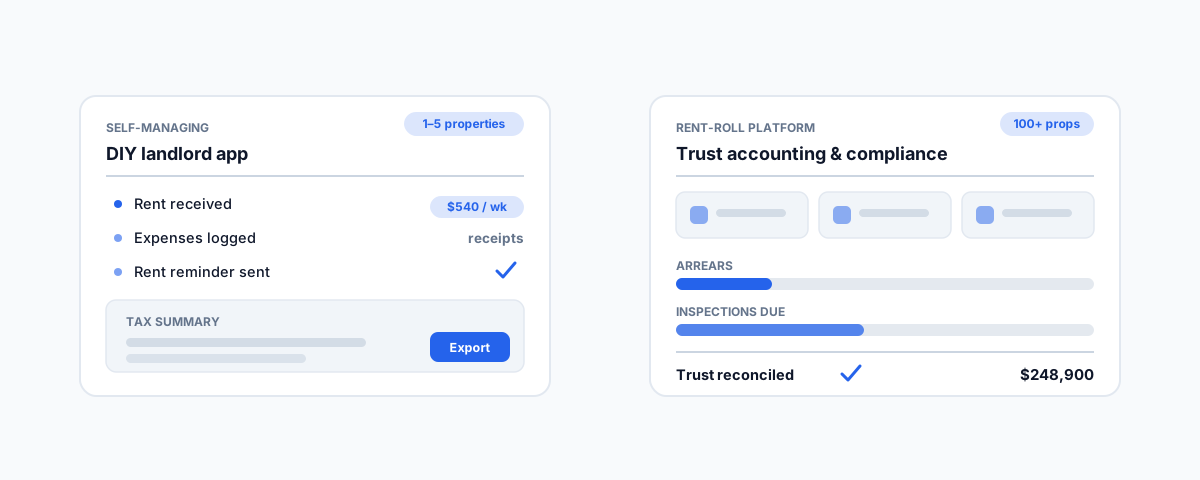
An Australian-first guide to property management software for landlords — the split between DIY self-managing tools and full rent-roll platforms, what to look for (rent tracking, arrears, inspections, Xero sync, state compliance), and the leading options for each.
"Property management software" is one of those phrases that hides two completely different products. To a landlord with one investment unit and a tenant who pays on time, it means a tidy app that tracks rent and spits out a tax summary. To someone running a rent roll of two hundred properties, it means a full platform with trust accounting, arrears automation, and inspection scheduling. Pick from the wrong tier and you either drown a simple situation in agency-grade complexity or outgrow a lightweight app the moment things get real. So the honest starting point is not "which software is best" but "which kind of landlord are you" — and then what to look for once you know. Here is the Australian lay of the land in 2026.
First, Which Kind of Landlord Are You?
There are really two camps, and they want different tools. The first is the self-managing landlord — a few properties, no agent, handling rent and tenants yourself. You want something that tracks income and expenses cleanly, chases rent, stores the lease and receipts, and makes tax time painless. The second is professional or rent-roll management — an agency, or a landlord scaling into a portfolio, where you are managing many properties (often other people's) and need trust accounting, compliance workflows, owner reporting, and a team using the system all day. Almost every frustration with property software traces back to buying for the wrong camp. Work out which you are first; the rest of this guide is split the same way.
What to Look For
Regardless of tier, a few capabilities separate software that actually helps from a glorified spreadsheet:
- Rent tracking and reconciliation — automatic matching of payments to tenants, so you know instantly who has paid and who has not.
- Arrears and late-rent workflows — automated reminders and a clear record, because chasing rent by memory is how it slips.
- Inspections and maintenance — scheduling routine inspections, logging issues, and tracking repairs and tradie costs against each property.
- Documents and leases — a single place for the lease, condition reports, bond paperwork, and correspondence.
- Accounting and Xero sync — income and expenses flowing to your accounting so tax and reporting are not a year-end scramble.
- Australian compliance — bond lodgement with your state authority, state-specific notice and entry rules, minimum-standards tracking, and clean records for the ATO.
That last point matters more here than anywhere else, because tenancy law in Australia is state-based — NSW, Victoria, Queensland and the rest each have their own rules on bonds, notice periods, and minimum standards. Software built for the US or UK often gets these subtly wrong, which is why local tools tend to win for anything compliance-heavy.
Software for Self-Managing Landlords
If you manage your own one to a handful of properties, you do not need trust accounting — you need clean records and a bit of automation. Landlord Studio is a strong fit: income and expense tracking, receipt scanning, rent reminders, and tax-ready reports, with Australian support. Cubbi is built specifically for Australian private landlords, handling advertising, tenant screening, digital leases, and rent collection end to end. Instarent covers similar ground as a DIY platform for self-managing landlords who want to run the whole tenancy from their phone. Many landlords with a single property also get a long way with plain accounting software like Xero plus a disciplined folder of documents — perfectly valid until the admin outgrows it. The trap to avoid at this tier is over-buying: an agency platform will bury a two-property landlord in features they will never touch.
Platforms for Professional and Rent-Roll Management
Once you are managing many properties — especially other people's money, which means trust accounting and audit trails — you are in agency territory, and Australia has mature, locally built options. PropertyMe is the market-leading cloud platform, strong on trust accounting, owner and tenant portals, arrears, and inspections. Console Cloud and PropertyTree (part of MRI Software) are the other two heavyweights, each a full end-to-end rent-roll system with deep compliance and reporting. Managed App takes a more owner-transparent, payments-first approach that some landlords and boutique agencies prefer. For commercial property, Re-Leased is purpose-built for the different rhythm of commercial leases — outgoings, rent reviews, and multi-tenancy — rather than residential. These are day-long-use systems for a team, priced and scoped accordingly; the goal here is not the fewest features but the most reliable trust accounting and compliance.
The Accounting Question
Whichever tier you land in, think early about how the software feeds your tax and accounting, because for a landlord the investment is ultimately a financial one. At minimum you want expenses categorised the way your accountant and the ATO expect, and a clean annual summary for your return — including the depreciation and interest detail that actually moves your tax position. The DIY tools handle this with built-in reports; the agency platforms handle owner statements and often sync to accounting systems like Xero. Getting this connection right from day one turns tax time from a shoebox reconstruction into an export. It is the same principle behind any good software setup: the tool that connects cleanly to what you already run is worth more than the one with the longest feature list.
How to Choose
A short way to cut through it:
- One to three properties, self-managed — a DIY app like Landlord Studio, Cubbi, or Instarent, or Xero plus good habits.
- Growing portfolio, still hands-on — a DIY platform with strong reporting, and a plan for when you cross into needing trust accounting.
- Managing others' properties, or a large rent roll — a full AU platform: PropertyMe, Console Cloud, or PropertyTree (Re-Leased for commercial).
- Compliance-heavy or multi-state — favour Australian-built software that tracks state tenancy rules natively.
Match the tier to your reality, not your ambition, and you can always step up later. If you are curious how this thinking applies to the wider real estate world, our guides to building a SaaS stack for real estate agents and using HubSpot for real estate cover the sales side — a different audience, but the same lesson about choosing tools that integrate rather than sprawl.
Getting Help
The best property management software is the one that fits how you actually landlord — light and tax-focused if you self-manage a few, full and compliance-grade if you run a rent roll — and that connects to the accounting and systems you already use. If you would like help choosing, setting up, and integrating the right tool, and keeping it running reliably, our Small Business IT Support service can take that off your plate. Get the foundation right, and the software quietly does the admin so you can get on with owning the property rather than managing the paperwork.