
12 July 2026
Cheaper Alternatives to Expensify for Australian Small Businesses (2026)
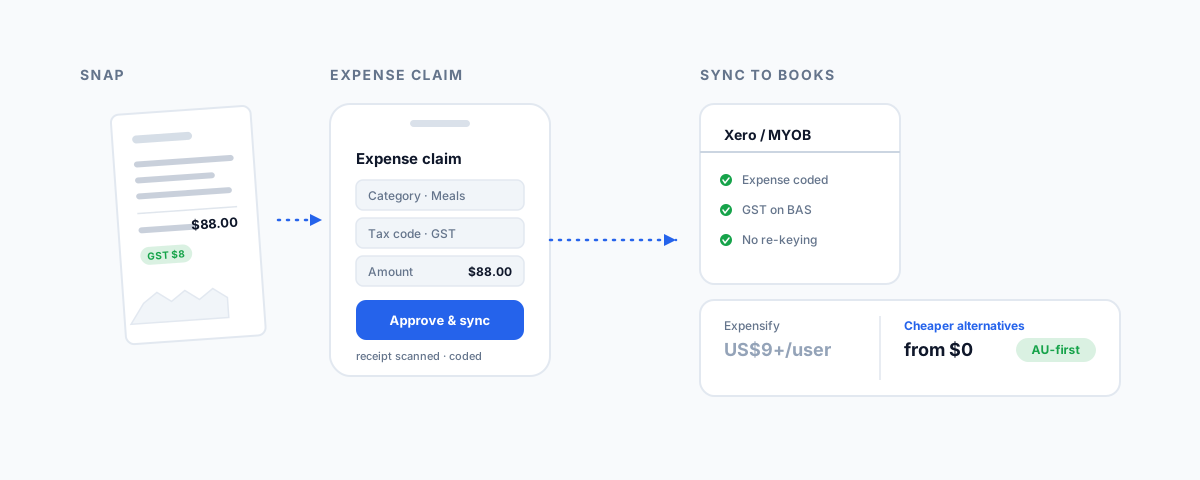
An Australian-first look at cheaper alternatives to Expensify — Zoho Expense, Weel, Xero Expenses, Hubdoc, and Dext — with how each is priced, how it handles GST and syncs to Xero or MYOB, and which suits which kind of small business.
Expensify is a capable expense tool, but for an Australian small business it has two quiet drawbacks: it is priced in US dollars, per active member, and it is built around a US-centric workflow. The paid plans run from around US$5 per user a month on the Collect plan to US$9 on Control — and that US$9 depends on you using the Expensify Card; without it, Control is US$18 per user. Add currency movement and the fact that the tools most Australian businesses actually keep their books in are Xero and MYOB, and it is worth asking whether you are paying for a fit you do not have. The good news is there are cheaper alternatives that sit more naturally against local accounting. Here are the ones worth a look.
What to Look For in an Expense Tool
Before comparing logos, get clear on what matters for an Australian business:
- Xero or MYOB integration — a clean, direct sync so coded expenses flow into your books without re-keying is the single biggest time saver, and where local tools beat US-first ones.
- GST handling — proper Australian tax codes on each expense so your BAS is correct, not a US sales-tax model.
- Receipt capture — reliable photo-and-scan (OCR) that reads receipts accurately, since this is the daily task staff actually do.
- Cards, if you need them — some tools bundle corporate or virtual cards with spend controls, which changes the economics.
- How it is priced — per active user, per user, or per business; and in which currency. A per-business tool can be far cheaper for a small team than a per-user one.
The Alternatives at a Glance
| Tool | Best for | Price signal | Syncs to |
|---|---|---|---|
| Zoho Expense | Cheapest all-round; tiny teams | Free up to 3 users; low single digits per user/month paid | Xero, QuickBooks |
| Weel (ex-DiviPay) | AU teams wanting cards and expense in one | Per user, AU-priced; free trial | Xero, MYOB, NetSuite |
| Xero Expenses | Businesses already on Xero | Low-cost add-on, per person submitting | Xero (native) |
| Hubdoc | Cheapest receipt capture on Xero | Free with any paid Xero plan | Xero (native) |
| Dext | Receipt-heavy businesses and bookkeepers | Around A$34/month per business | Xero, MYOB, QuickBooks |
The Cheapest All-Rounder: Zoho Expense
For most small businesses watching the budget, Zoho Expense is the standout on price. It has a genuinely useful free plan covering up to three users, and its paid plans sit in the low single digits per user per month — well under Expensify — while still doing the real work: receipt scanning, approval workflows, corporate card reconciliation, and mileage. It integrates with Xero and QuickBooks, and if you already run other Zoho apps it slots in neatly. The main caveats are that the free plan caps monthly receipt scans, and pricing is in US dollars, so factor the exchange rate in. For a small team that just needs expenses captured, approved, and pushed to the books cheaply, it is hard to beat.
The Local Option With Cards: Weel
If your spending is card-led, Weel — formerly DiviPay — is the strongest Australian option. Built here and used by thousands of Australian and New Zealand businesses, it combines corporate and virtual cards with real-time spend controls, AI receipt scanning, approval workflows, and accounts-payable automation, then reconciles directly with Xero, MYOB, and NetSuite — mapping your chart of accounts and tracking categories so expenses code themselves. Pricing is per user per month and set in Australian dollars, with a free trial to test the fit. Where Expensify is an expense-reporting tool that added a card, Weel is a spend-management tool built around cards, which for a business that wants to issue cards and control spend up front is a genuinely different and often cheaper proposition.
If You Are Already on Xero: Xero Expenses or Hubdoc
For businesses already paying for Xero, the cheapest path may be to use what is next to your books. Xero Expenses is a low-cost add-on billed per person submitting claims, with receipt capture and approvals built into the accounting software you already run — no second system to reconcile. And Hubdoc, which is included free on any paid Xero plan, handles the receipt- and bill-capture side at no extra cost: snap or email a receipt and it publishes to Xero. Hubdoc is capture rather than a full claims-and-approval workflow, and since a Xero change it focuses on header-level data rather than line items, but for a small business whose real need is getting receipts into the books without losing them, free is a very good price. Between them, a Xero business can often cover expenses without paying for Expensify at all. We cover connecting stores and systems to Xero in our guide to Shopify and Xero.
The Bookkeeper's Favourite: Dext
Dext (formerly Receipt Bank) is the receipt- and data-capture tool many Australian bookkeepers already use, and it is worth knowing because of how it is priced: Dext Business runs around A$34 a month per business rather than per user, which for a team of several people can work out cheaper than any per-seat tool. It is strong on line-item extraction, handles expense claims, and integrates with Xero, MYOB, and QuickBooks. It leans more toward bookkeeping-grade document capture than slick employee travel expenses, so it suits receipt-heavy businesses and anyone whose accountant already works in it.
Which One Should You Choose
Match the tool to your reality rather than the headline price:
- Smallest teams and tightest budgets — Zoho Expense, starting free for up to three users.
- You want to issue cards and control spend — Weel, as the local, AUD-priced, card-first option.
- You already pay for Xero — start with Hubdoc (free) for capture, and add Xero Expenses if you need claims and approvals.
- Receipt-heavy, or your bookkeeper uses it — Dext, priced per business rather than per seat.
One honest note: expense-software pricing and plan structures change often, and several of these tools price in US dollars, so confirm the current figure in Australian dollars before you commit. The most expensive mistake is switching to shave a few dollars and losing the clean accounting sync or GST handling you actually rely on. If you are also reconsidering the books themselves, our guide to the best QuickBooks alternatives for small business covers the accounting layer these expense tools feed into.
Getting Help
Choosing an expense tool — and wiring it into your accounting so expenses code and sync cleanly rather than creating a second pile of admin — is worth getting right the first time. If you would like help picking the best fit for how your business actually spends, and setting it up against your Xero or MYOB file with the right tax codes and approval flow, our Small Business IT Support service can guide the choice and handle the setup. Spend a little time on the fit, and expense management stops being a monthly chore and starts running itself.