
31 July 2026
Fraud and Chargeback Prevention for Australian Shopify Stores
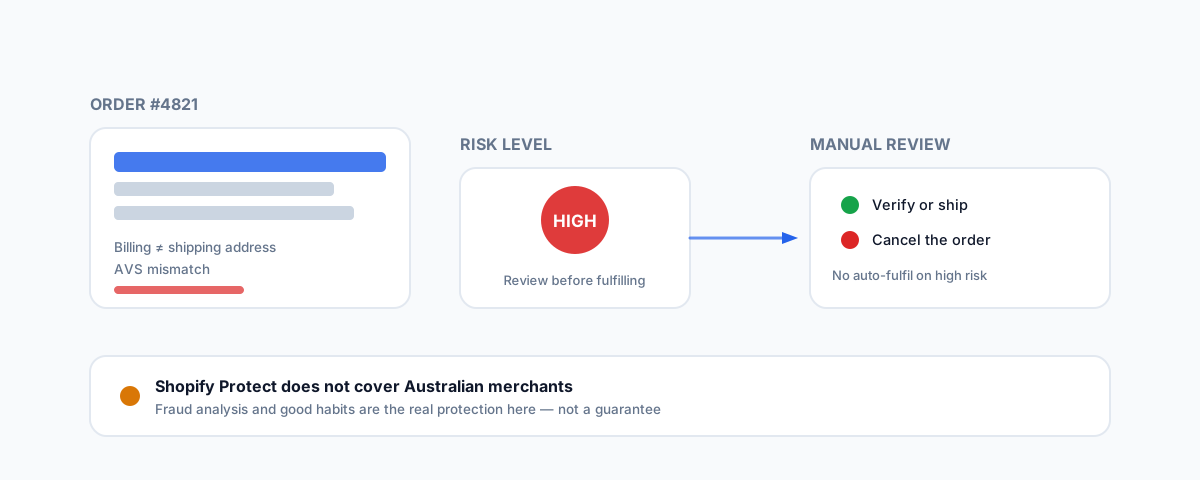
Most Shopify chargeback advice is written for US stores and assumes Shopify Protect has your back. Australian merchants don't get that guarantee — here's how Shopify's fraud analysis actually works, what causes chargebacks, and the practical steps that cut losses without it.
A chargeback costs more than the refund. You lose the product if it already shipped, you pay a chargeback fee on top of losing the sale, and if disputes keep piling up, Shopify Payments can restrict or disable your ability to take payments at all. Most of what's written about preventing this online assumes a US store, because it leans on Shopify Protect — Shopify's own chargeback guarantee. That guarantee is not available to Australian merchants. If you run a Shopify store here, the practical playbook is different: lean harder on Shopify's built-in fraud analysis, understand exactly how a dispute plays out, and get the prevention basics right, because there is no safety net underneath you.
Why Shopify Protect Doesn't Save You Here
Shopify Protect covers eligible orders paid through Shop Pay for US-based merchants — if a covered order turns out to be fraudulent, Shopify eats the chargeback and the fee. It's a genuinely good deal, and it's exactly why so much chargeback advice aimed at Shopify merchants treats prevention as a nice-to-have rather than the whole game. For an Australian store, it isn't available, so every dispute that lands is yours to absorb or fight, with no guarantee standing behind Shop Pay orders. Knowing this upfront changes the calculus: the fraud analysis tools built into every Shopify plan, and the habits around using them, are not a backup — they are the actual protection you have.
How Shopify's Fraud Analysis Actually Works
Every order in Shopify gets a risk assessment — low, medium, or high — based on signals Shopify checks automatically: whether the billing and shipping addresses match, whether the card's address verification (AVS) result comes back clean, whether the order's IP address looks consistent with the billing location, and whether the order size or pattern looks unusual. You can see this risk level directly on the order page in your Shopify admin before you fulfil anything.
The habit that actually matters is simple and easy to skip when you're busy: do not auto-fulfil orders Shopify flags as high risk. Open them, look at what triggered the flag, and decide — cancel it, ask for more verification, or ship it because the flag was a false positive (a customer travelling, a gift order to a different address). Fulfilling a high-risk order without checking it first is the single most common way stores end up eating chargebacks they could have caught.
What Actually Causes Chargebacks (It's Not Always Fraud)
Genuine stolen-card fraud is only part of the picture. A large share of chargebacks are what's known as "friendly fraud" — a customer disputes the charge with their bank instead of contacting you, often because it's faster than requesting a refund, because they don't recognise the transaction descriptor on their statement, or because they're unhappy with the product and don't know (or don't want) to go through your returns process first. This matters because it changes where you focus: clear billing descriptors, an easy-to-find returns policy, and responsive customer service prevent as many disputes as fraud screening does. It's also worth knowing the difference between a chargeback and an inquiry — an inquiry is a bank asking for more information before deciding whether to formally dispute the charge, and responding to it well can stop it from becoming a chargeback at all.
The Dispute Process and the Evidence Window
When a chargeback lands on a Shopify Payments order, Shopify automatically submits some order information to the cardholder's bank on your behalf, but you get a compressed window to add more evidence before the deadline closes. The evidence that actually moves the needle is concrete: delivery confirmation with a signature, carrier tracking showing delivery to an address that matches the order, customer email or message threads, and your policy pages as they appeared at the time of the order. The final call is made by the customer's bank, not by Shopify — Shopify facilitates the dispute and forwards evidence, but it cannot decide the outcome or reimburse you if you lose. Full detail on what counts as strong evidence and how the timeline works is in Shopify's own guide to chargebacks and inquiries.
A Practical Prevention Checklist
- Use tracked, signature-required shipping on higher-value orders — delivery confirmation to a matching address is the strongest evidence you can produce if a dispute lands.
- Keep your billing descriptor recognisable — if your store trades under a different name than the one that shows on a customer's bank statement, that mismatch alone generates disputes from confused customers, not fraudsters.
- Put your returns and refund policy where customers actually see it — at checkout and on the order confirmation, not buried in a footer link. A customer who knows how to get a refund is less likely to go straight to their bank.
- Never auto-fulfil a high-risk-flagged order — a manual look before shipping catches the obvious cases for free.
- Respond to support requests and bank inquiries promptly — inquiries have short response windows, and a fast, clear reply stops a fair number of them from escalating into a formal chargeback.
- Keep records of every order's communication trail — the emails and messages you'll want as evidence are much easier to pull together if you're not searching for them under deadline pressure.
When Chargebacks Pile Up
Shopify Payments monitors your chargeback rate, and a rate that climbs too high puts your ability to process payments at risk — in the worst case, restriction or removal from Shopify Payments entirely, which is a far bigger problem than any single disputed order. If fraud is a persistent issue for your store rather than the occasional dispute, third-party fraud-prevention apps on the Shopify App Store can add extra layers Australian merchants don't get natively — device fingerprinting, velocity checks across orders, and automated risk scoring beyond Shopify's built-in analysis. Card-not-present fraud is also a broader trend worth staying aware of; the ACCC's Scamwatch tracks current scam and payment fraud patterns affecting Australian consumers and businesses, which is a useful ongoing reference beyond your own store's numbers.
Getting Help
Fraud and chargeback prevention is ultimately a handful of habits done consistently — checking risk flags before fulfilling, keeping evidence organised, and making refunds easy to request — rather than a single tool that solves it. Chargebacks also show up in your Shopify payouts, so if you're trying to make sense of fees and deductions there as well, our guide to reconciling Shopify payouts and fees in MYOB covers that side of it. If you'd like your store's fraud settings, checkout, and app stack reviewed and set up properly, our Shopify Integrations service can take care of it.