
28 July 2026
Rental Property Accounting Software With Direct Deposit: What That Actually Means in Australia
"Direct deposit" is mostly a US banking term — Australian rent automation runs on direct debit, direct credit, PayID, and PayTo instead. What property accounting software actually automates (rent collection versus owner disbursement), real examples from Cubbi and PropertyMe, and what to check before you choose.
Search for "rental property accounting software with direct deposit" and most of what you'll find is written for a US audience, because direct deposit is largely a US and Canadian banking term — usually for an employer pushing wages straight into an employee's account. Australian banking runs on a different set of names for the same underlying idea: direct debit for pulling a payment out of an account, direct credit or EFT for pushing one in, and increasingly PayID and PayTo for the newer real-time rail underneath both. None of that changes what you're actually after — rent moving automatically without anyone manually transferring it — it just means the feature you want is filed under different names here, and it's worth understanding what's actually being automated before you compare software on the strength of a marketing page.
Two Automations, Not One
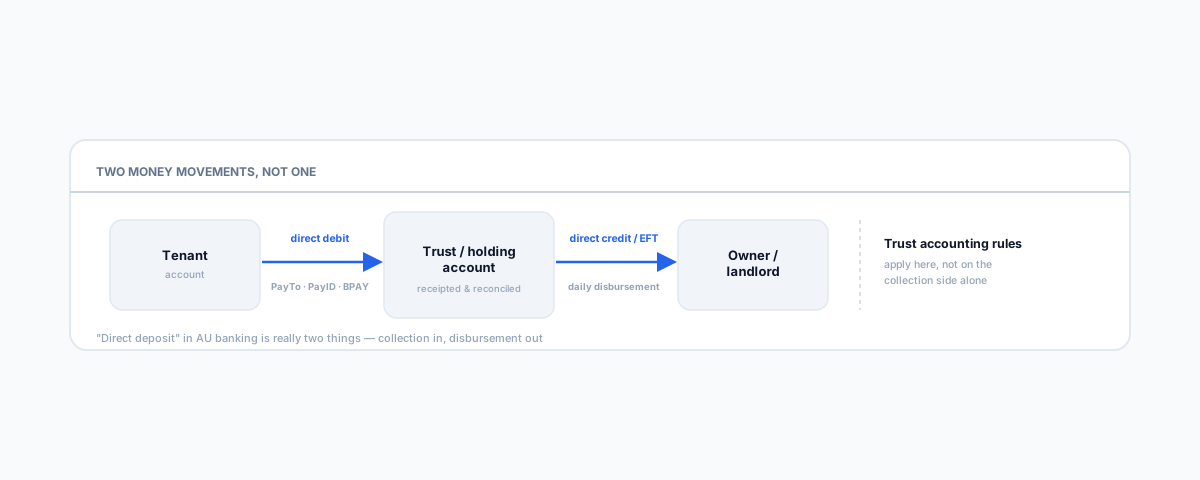
Property accounting software marketing tends to lump "automatic payments" into a single feature, but there are genuinely two separate money movements happening, with different mechanics and very different compliance weight:
- Rent collection — money moving from the tenant's account into yours (or the agency's trust account). This is the direct debit side: the tenant authorises a scheduled pull, and the software triggers it on the due date.
- Owner disbursement — money moving from the trust or holding account out to the landlord. This is the direct credit / EFT side, and if an agency is involved, it has to happen inside Australian trust accounting rules, not just as a generic bank transfer.
A tool can be excellent at one of these and mediocre at the other, so it's worth checking both separately rather than assuming "automatic payments" on a features list covers the whole picture.
Rent Collection in Practice
Cubbi, a DIY platform built for Australian self-managing landlords, is a useful concrete example of how this actually works today. A tenant sets up AutoPay by nominating the bank account or card rent should be deducted from, and Cubbi withdraws it automatically on the due date — no manual chasing, no landlord logging in to check a bank feed. The mechanics behind that have genuinely improved recently: AutoPay now processes through PayTo, the real-time payment rail built on Australia's New Payments Platform, so a rent payment settles in around 30 seconds rather than the 3 business days the older direct debit method took. Tenants also get PayID and BPAY as alternative ways to pay, which matters because not every tenant wants to hand over ongoing debit authority.
Owner Disbursement in Practice
On the agency side, PropertyMe's MePay system is the clearest example of what disbursement automation actually looks like once trust accounting is involved. Its DirectPay option uses PayTo and PayID to move rent from receipt through to owner and supplier payments automatically, with daily disbursement — meaning an owner isn't waiting on a manual monthly or fortnightly run to see funds land. ClassicPay, the other option under MePay, keeps a more traditional trust account structure while still using the New Payments Platform to speed up the transfer itself. Both matter for a different reason than the rent-collection side: this money has come from someone else's tenant, sitting in someone else's trust account, so the disbursement has to satisfy Australian trust accounting requirements on top of just moving fast — traceability and audit trail, not only speed.
DIY Landlord or Agency-Grade — the Automation Differs
If you self-manage a handful of properties directly, a DIY tool like Cubbi or Landlord Studio automating tenant-to-landlord transfers is the right shape of solution — there's no trust account in the picture, just your bank account receiving rent on schedule. If you're managing other people's properties, or your portfolio has grown into a genuine rent roll, the disbursement side has to run through a trust-compliant platform like PropertyMe, Managed App, or Console Cloud — a DIY landlord app that isn't built for trust accounting is the wrong tool once other owners' money is involved, regardless of how good its payment automation looks.
What to Actually Check Before Choosing
- Transaction fees — some legacy direct debit rails run fee-free but are being phased out (PropertyMe's own legacy Direct Debit option is flagged for end-of-life by 2030), while newer PayTo-based rails may carry different fee structures — check current terms rather than assuming free.
- Processing speed — real-time PayTo settlement versus a multi-day legacy direct debit is a meaningful difference if cash flow timing matters to you.
- Whether the platform ever holds funds — some tools pass payments straight through without holding a balance; others (particularly trust-account platforms) hold funds by design, which is a feature, not a flaw, when trust compliance is required.
- Reconciliation — confirm payments auto-receipt against the right tenant and lease rather than landing as an unmatched bank transaction you have to reconcile by hand.
Getting Help
Once you know whether you actually need rent-collection automation, disbursement automation, or both — and whether trust accounting applies to your situation — picking software gets a lot more concrete than searching for "direct deposit" and hoping the right result turns up. Our broader guides to property management software for Australian landlords and the wider platform landscape cover the rest of what to look for beyond payments. If you'd like help choosing and setting the right tool up properly, our Small Business IT Support service can take that off your plate.