
30 July 2026
Zero Trust Workspace vs Secure Workspace: Are They the Same Thing?
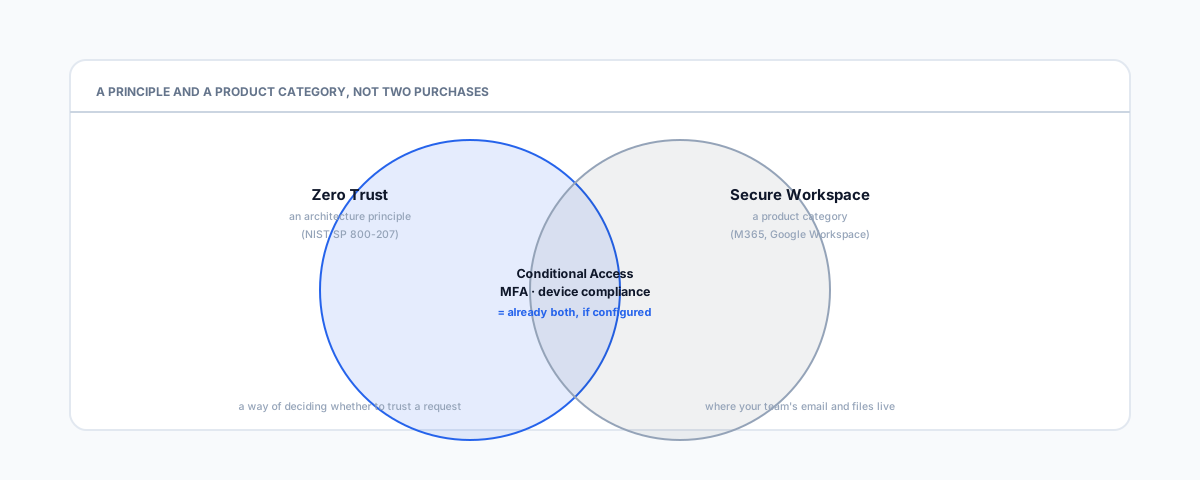
Vendors now sell "Zero Trust secure workspace" like it's one product. It isn't — Zero Trust is an architecture principle and secure workspace is a product category. What each term actually means, where they overlap in practice, and why you may not need to buy anything extra to get both.
Landing pages have started selling "Zero Trust secure workspace" as if it's a single thing you buy — a step up from an ordinary secure workspace, implying a separate purchase or a separate product tier. It isn't one thing. Zero Trust is an architecture principle — a way of deciding whether to trust a request. Secure workspace is a product category — the platform where your team's email, files, and apps actually live. A workspace can be built on Zero Trust principles or not, in the same way a building can be built to a fire code or not; nobody sells you "fire code" as an add-on, it's a description of how the thing was actually built. Here's what each term really means, and where — usually — they turn out to already be the same thing you're paying for.
Zero Trust Is a Principle, Not a Product
Zero Trust comes from a specific, defined source: NIST Special Publication 800-207, the US standards body's Zero Trust Architecture framework that the rest of the industry — including Microsoft's own documentation — points back to as the definition. Its core idea is "never trust, always verify": instead of trusting a request because it came from inside the office network or from an already-logged-in session, every access request is evaluated on its own, based on the identity making it, the device it's coming from, and the current risk signals — not on where it physically originated. NIST's own framework spells this out as a specific tenet: access to resources is granted per-session, with each request evaluated independently, rather than trusting a session indefinitely once someone is in. That principle can be applied in different places — at the network layer, which is what our VPN vs Zero Trust Network Access guide already covers for remote access — or at the identity, device, and application layer, which is what actually happens inside your workspace itself, every time someone opens an email or opens a file.
Secure Workspace Is a Product Category
"Secure workspace," by contrast, isn't a principle at all — it's the plain description of the product category Microsoft 365, Google Workspace, Box, and similar platforms sit in. Our guide to secure workspace setup for small business covers what actually makes one of these platforms secure in practice — MFA enforcement, Conditional Access, DLP rules, admin logging, access reviews. None of that checklist is Zero Trust by name. It's just good configuration. Whether that configuration happens to satisfy Zero Trust principles is a separate question, and the honest answer is: it usually does, almost by accident, once you've done it properly.
Where They Collapse Into the Same Thing
This is the part vendors don't make obvious, because it undercuts the pitch for a separate "Zero Trust" product: a correctly configured Microsoft 365 or Google Workspace tenant already is a Zero Trust workspace. Conditional Access evaluating every sign-in against device compliance, location, and risk signals — rather than trusting a session because the password was correct once — is a direct, practical implementation of NIST's per-session, per-request evaluation tenet. Enforced MFA, device compliance checks, and session controls that re-verify rather than trust indefinitely are the identity-and-device layer of Zero Trust, running inside the workspace you already have. There usually isn't a separate "Zero Trust workspace" sitting next to your "secure workspace" waiting to be purchased — there's one workspace, and the question is only whether it's configured to the standard the name implies.
The Buying Decision
Before paying for a bolt-on product marketed specifically as "Zero Trust," check what your existing licence already includes. Conditional Access, device compliance, and session controls are already part of Microsoft 365 Business Premium and the E3/E5 tiers, and Google Workspace's equivalent Context-Aware Access sits inside its own higher plans. For most small businesses, the actual cost of "becoming Zero Trust" isn't a new subscription — it's the configuration work covered in our secure workspace setup guide, done properly, on a licence you may already be paying for. It's worth confirming that before a vendor convinces you otherwise.
Getting Help
If you want to know whether your current Microsoft 365 or Google Workspace plan already includes what a "Zero Trust" upsell is offering, or you'd like help actually configuring Conditional Access and device compliance properly, our Small Business IT Support service can take that off your plate.