
17 July 2026
Jobber for Cleaning and Lawn Care Businesses in Australia (2026)
Jobber is built for recurring home services — but Australian users get a reduced version. What works brilliantly here (recurring jobs, routing, client hub, batch invoicing), what is missing (Jobber Payments, SMS), and how to fill the gaps.
Jobber's home turf is not plumbing or electrical — it is cleaning rounds and lawn care runs: dozens of small recurring visits, tight routes, and clients who judge you on communication as much as the work. For that shape of business it is arguably the best-designed tool on the market. But there is a catch that Australian buyers usually discover after signing up rather than before: several of Jobber's headline features — Jobber Payments, SMS messaging, and the AI Receptionist among them — are not available in Australia. That does not sink it. It does mean an Australian cleaning or lawn care business is buying a different product from the one in the North American reviews, and should decide with the local version in view. Here is the honest picture.
Why Recurring Home Services Fit Jobber
The features that make Jobber shine are precisely the ones a recurring round lives on:
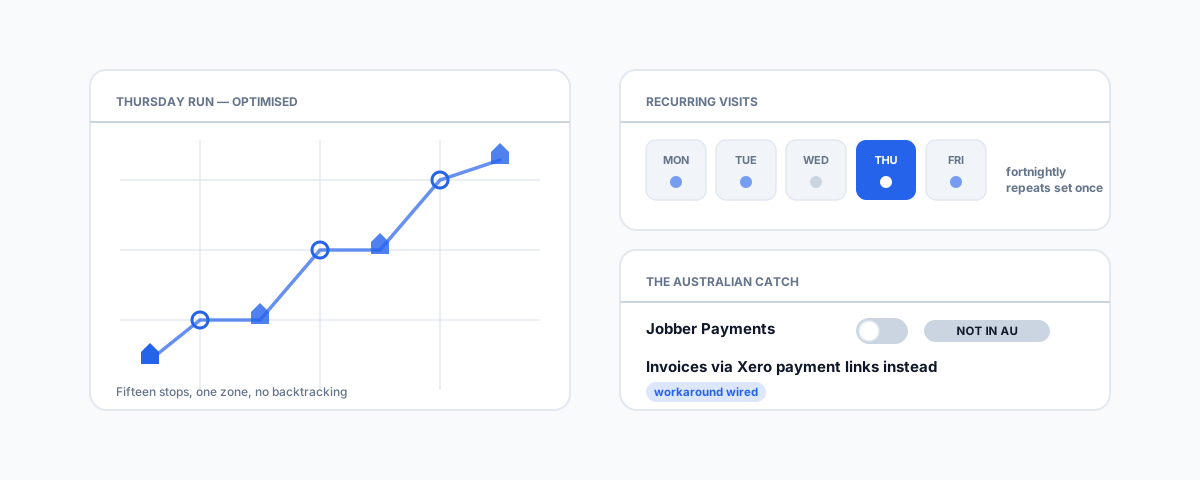
- Recurring job scheduling — weekly, fortnightly, or monthly visits are first-class objects, not calendar copies. Change a client's pattern once and the future visits follow, which is the difference between a schedule and a guessing game as the round grows.
- Route optimisation — Jobber reorders a day's or week's visits into an efficient route in seconds and adjusts when plans change. For a mowing run doing fifteen stops a day, the fuel and windshield time this recovers is the feature paying for itself.
- The client hub — every client gets a portal where they can see upcoming visits, approve quotes, and view invoices. For cleaning businesses especially, this quietly eliminates the "when are you coming?" messages that eat an admin hour every day.
- Online booking and requests — new enquiries pick a slot subject to your rules rather than starting a phone-tag round.
- Batch invoicing — month-end invoicing for a hundred recurring clients becomes one sitting, not a weekend. This is the feature that separates round-based businesses from job-based ones, and Jobber does it well.
The Australian Catch
In Australia, at the time of writing, Jobber Payments is not available — nor is SMS through Jobber, nor the AI Receptionist. Day to day that means: no card-on-file charged automatically after each visit, no tap-to-pay on your phone through the Jobber app, and your automated follow-ups arriving by email rather than text. The card-on-file gap matters most, because effortless payment collection is half the reason North American cleaning businesses rave about the product. The workarounds are workable but real: invoices flow to your accounting platform, whose own payment links (with their card and PayID options) do the collecting; regulars can be moved to direct debit through your accounting stack; and on-site card payment means a separate terminal — a Square reader or your bank's — reconciled against the invoice rather than woven into it. Budget the setup time for that wiring; it is the difference between a smooth round and an unpaid-invoice spreadsheet.
GST and Invoicing
Treat your accounting file, not Jobber, as the tax source of truth. Connect the accounting integration on day one, make sure your service items carry GST correctly, and let the accounting platform issue-and-reconcile while Jobber runs the operational side — visits, crews, and client communication. Businesses that try to run everything from the job system in Australia end up fighting the missing payments layer; businesses that split the roles cleanly barely notice it.
How It Compares Locally
The honest comparison: ServiceM8 and Tradify are built for this market — local payment options, SMS, GST-native workflows — and for a sole trader or small crew they are simpler and cheaper to run, as we cover in our guide to the best software for tradies in Australia. Jobber's edge is the client experience (the hub and booking flow are a class above), the routing, and how gracefully it scales past one crew. A rough rule that has held up: if your business is one person and a ute, the local tools win on price and payments; if you are running multiple crews on recurring rounds and your growth constraint is scheduling and client communication rather than payment collection, Jobber's strengths start outweighing the Australian gaps.
Setting It Up Well
Three setup habits pay off for round-based businesses. Name recurring jobs by pattern and area, not just client — "Fortnightly — Kellyville — Thursday run" — so the schedule reads like a round, not a list. Group clients into zones that match how you actually drive, then let route optimisation work within the zone rather than dragging you across the city for one stop. And make batch invoicing a calendar ritual with a fixed day, so cash flow is a rhythm instead of a scramble. Once the round is stable, the follow-ups, review requests, and enquiry-form wiring are where the admin hours really fall away — our guide to automating Jobber walks through those layers.
Getting Help
The recurring theme in every Jobber-in-Australia setup we see is the wiring: the accounting integration carrying the payments burden, the enquiry form feeding requests properly, and the workarounds for the missing local features set up once and correctly. That integration work is what our workflow automation service covers. Jobber in Australia is a strong tool with an asterisk — go in knowing what the asterisk covers, wire the payment path deliberately, and the recurring-round machinery underneath is the best in its class.